Powerstrip
featuring TipToe

Designed directly for the workstation to deliver accessible power at desk height while keeping cable clutter under control.

Student Project | 4. Semester | Revisited
Solidworks, Keyshot, AI (Viscom, Gemini)
5 Months: 2 Research, 1 Concept, 2 Design

Pain Points

Chasing cables behind the desk and untangling knots cannot be the answer.

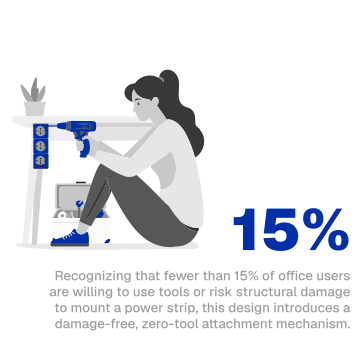
Current desk outlets require drilling into your furniture, leaving no toolless alternative.

Power and cable control belong within reach on the desk, not hidden in a dusty crawl space below.

Accessible desk power usually means tangled cords in the dark or a tabletop ruined by invasive screws.

Review & Refine

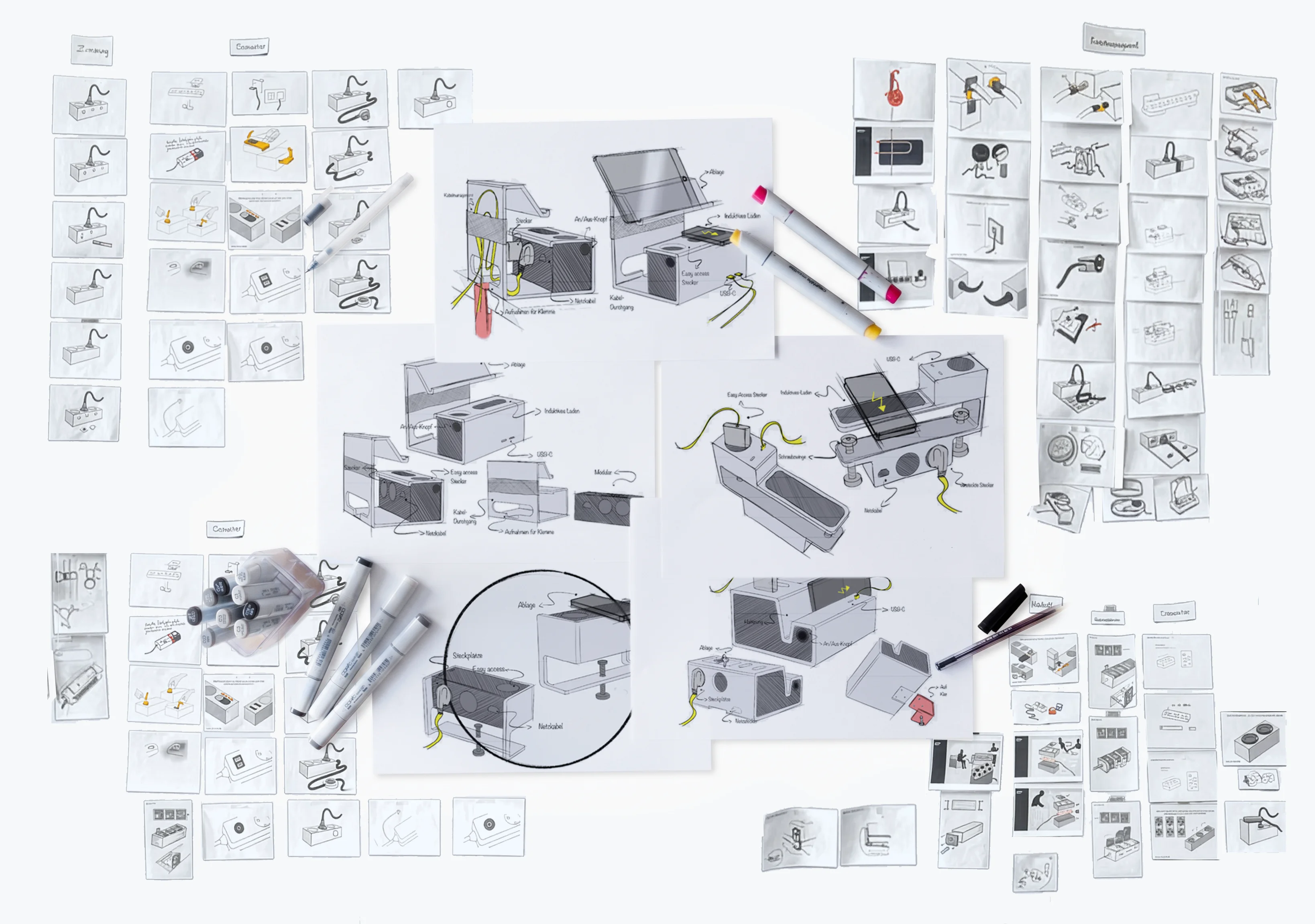
During my studies, we learned never to design inside an isolated bubble. The core of the process was opening up to honest critique, actively gathering team feedback, and using outside perspectives to continuously refine every concept.

Understanding a Product Category Inside Out

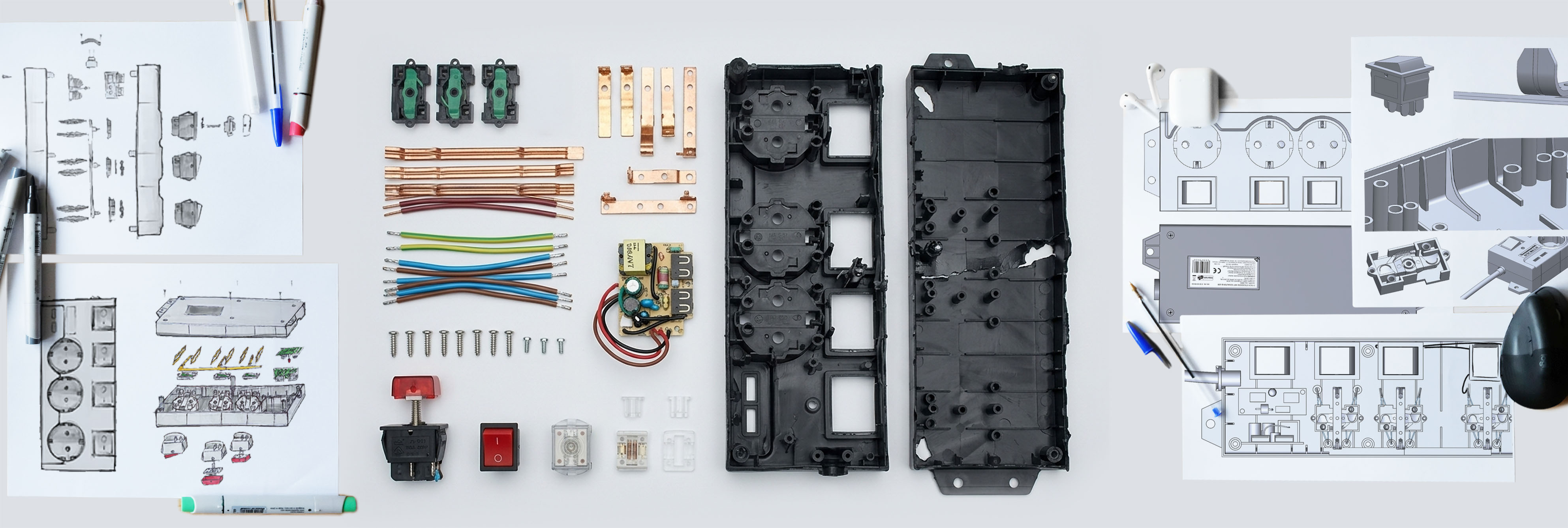
The challenge was to take an apparently simple product and break it down to its bare essentials. Moving from initial sketches into detailed internal architecture and technical analysis, every component was reverse engineered and rebuilt in CAD to understand real dimensions, tolerances, and how each part locks into the next.

Adapting a Design Language

The brief was to study an existing brand and design a power strip that embodies its visual identity and philosophy. I chose TIPTOE, a French brand known for its modular clamp on furniture.

The TIPTOE aesthetic gave a strong formal foundation, but shaping the product still took extensive sketching and hands on mockups to dial in proportions. The real challenge lay beneath the surface, centered on technical feasibility and rigorous engineering to understand the hidden complexity and manufacturing constraints of an everyday hardware product like a power strip.

PLUG

Clamp on Powerstrip

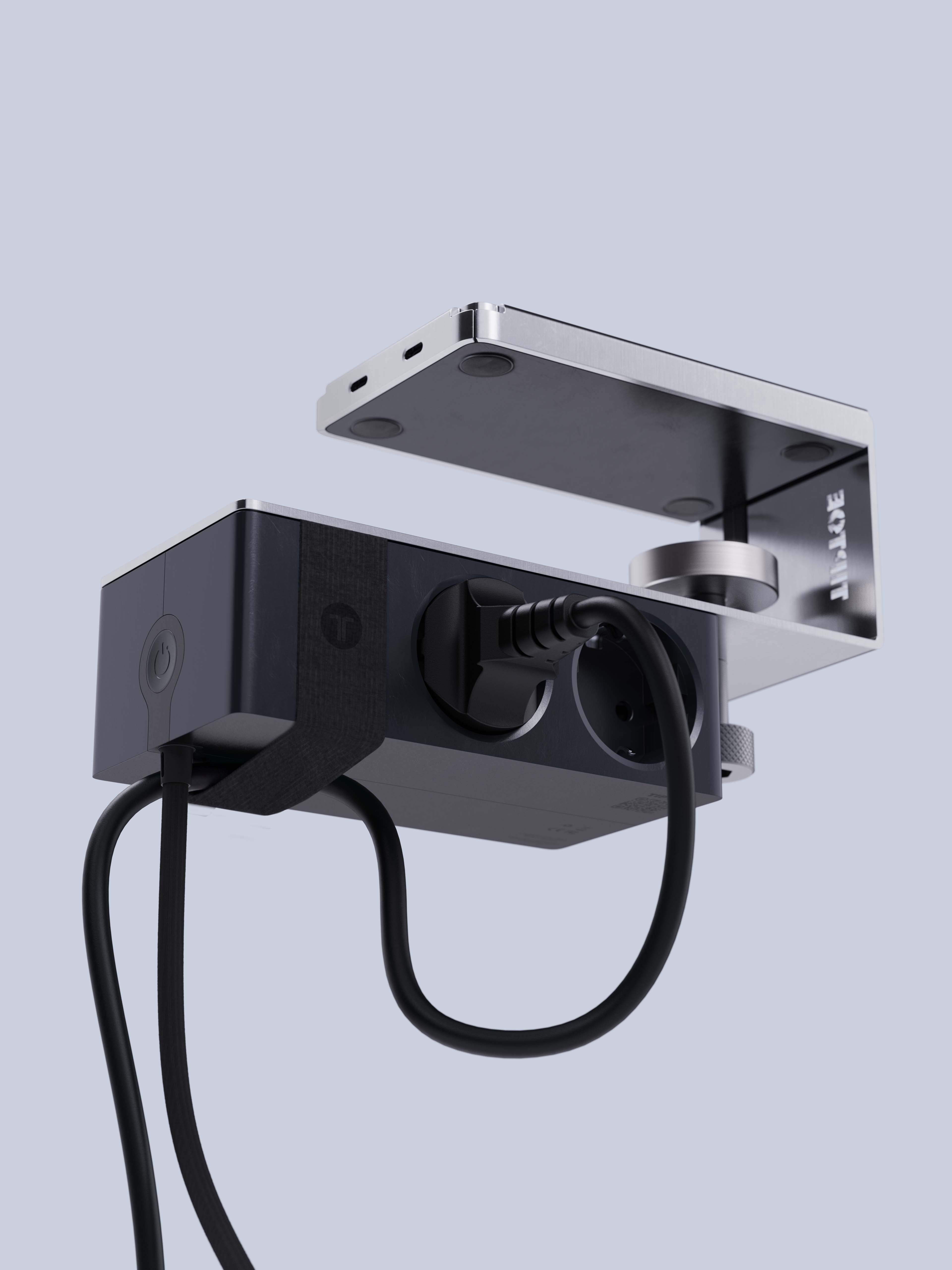
The top surface features two USB C ports delivering up to 64W, enough to power everyday office devices. A wireless charging pad sits flush alongside them, giving your phone and daily essentials a spot on the desk.

The structural backbone is a single folded sheet of laser cut steel, providing mechanical strength while keeping the profile clean. Secondary components use injection molded plastic enclosures to package the internal circuit boards and electrical contacts.

The design centers on two functional elements. An integrated routing strap keeps desktop cable clutter organized. Four power outlets, two per side, provide balanced access without plugs colliding.

More Projects

Selected Work

Discover more case studies and design explorations.

hope you found something interesting

Industrial Designer based in Germany, focusing on hardware, tactile interactions, and purposeful physical products.

GET IN TOUCH

Have an upcoming hardware project, feedback on my work, or want to discuss a potential collaboration? I am always open to new challenges, whether that is a full-time role, freelance work, or simply sharing ideas over a quick virtual coffee. Feel free to drop me a message or connect directly via the links above.

© 2026 Leon Wagner

LEON

WAGNER®

Powerstrip
featuring TipToe

Designed directly for the workstation to deliver accessible power at desk height while keeping cable clutter under control.

Student Project | 4. Semester | Revisited
Solidworks, Keyshot, AI (Viscom, Gemini)
5 Months: 2 Research, 1 Concept, 2 Design

Pain Points

Chasing cables behind the desk and untangling knots cannot be the answer.

Current desk outlets require drilling into your furniture, leaving no toolless alternative.

Power and cable control belong within reach on the desk, not hidden in a dusty crawl space below.

Accessible desk power usually means tangled cords in the dark or a tabletop ruined by invasive screws.

Review & Refine

During my studies, we learned never to design inside an isolated bubble. The core of the process was opening up to honest critique, actively gathering team feedback, and using outside perspectives to continuously refine every concept.

Understanding a Product Category Inside Out

The challenge was to take an apparently simple product and break it down to its bare essentials. Moving from initial sketches into detailed internal architecture and technical analysis, every component was reverse engineered and rebuilt in CAD to understand real dimensions, tolerances, and how each part locks into the next.

Adapting a Design Language

The brief was to study an existing brand and design a power strip that embodies its visual identity and philosophy. I chose TIPTOE, a French brand known for its modular clamp on furniture.

Translating the TIPTOE aesthetic into physical mockups quickly dialed in proportions, but the true challenge lay beneath the surface. The project centered on rigorous engineering and understanding the real manufacturing constraints of everyday hardware.

PLUG

Clamp on Powerstrip

The top surface features two USB C ports delivering up to 64W, enough to power everyday office devices. A wireless charging pad sits flush alongside them, giving your phone and daily essentials a spot on the desk.

The structural backbone is a single folded sheet of laser cut steel, providing mechanical strength while keeping the profile clean. Secondary components use injection molded plastic enclosures to package the internal circuit boards and
electrical contacts.

The design centers on two functional elements. An integrated routing strap keeps desktop cable clutter organized. Four power outlets, two per side, provide balanced access without plugs colliding.

More Projects

Selected Work

Discover more case studies and design explorations.

hope you found something interesting

GET IN TOUCH

Feel free to reach out for new opportunities, project inquiries, or just an informal chat about product design and prototyping.

© 2026 Leon Wagner

LEON

WAGNER®